
A Mexican Ritual of Altars, Marigolds & Memory
🗝️ I. Etymology & Seasonal Setting
Seasonal Context
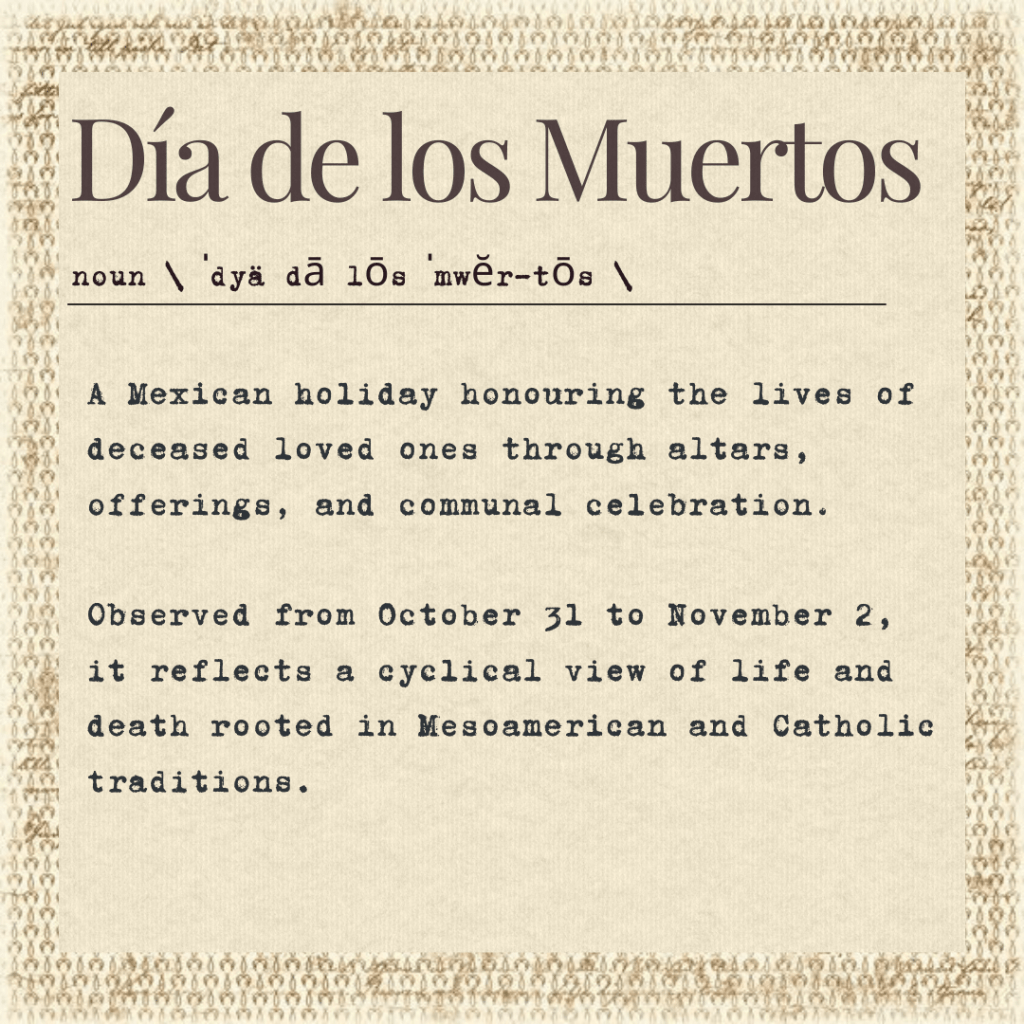
Celebrated during the dry season and harvest in central Mexico, when marigolds bloom and the air carries ancestral memory. It coincides with All Saints’ Day and All Souls’ Day, blending indigenous and Catholic calendars.
“No hay muerto malo.” — Mexican saying (There is no bad dead.)
📜 II. Historical Origins & Cultural Significance
Earliest documentation traces back over 3,000 years to Aztec and Nahua rituals honoring the dead. In pre-Columbian belief, death was not an end but a transition to Mictlán, the underworld. Souls required food, water, and tools to journey through nine levels before reaching peace. Spanish colonisation layered these beliefs with Catholic observances, creating a syncretic ritual that honours both indigenous cosmology and Christian saints.
“The dead may return, if only for a few hours, to enjoy the pleasures they knew in life.” — María Herrera-Sobek
🍽️ III. Rituals, Symbols & Sacred Foods
- Families build ofrendas (altars) with photos, candles, and offerings.
- Graves are cleaned, decorated, and visited with music and food.
- Sugar skulls, pan de muerto (bread of the dead), and tamales are shared.
- Papel picado (cut paper) symbolises the fragility of life.
- Copal incense is burned to guide spirits home.
Pan de muerto is often shaped like bones and dusted with sugar—symbolising the sweetness of remembrance.
🌿 IV. Flora, Fauna & Folkloric Associations
- Cempasúchil (Mexican marigold) is the sacred flower of the dead—its scent and color guide spirits.
- Copal trees provide resin for ritual incense.
- Butterflies, especially monarchs, are believed to carry ancestral souls.
- Dogs, especially the Xoloitzcuintli, were guides to the underworld in Aztec lore.
Botanical note: Cempasúchil blooms in late October, its golden petals scattered on altars and paths to welcome the departed.
📖 V. Lorekeeper’s Tale
In Nahua legend, Mictecacihuatl, the Lady of the Dead, rules Mictlán and watches over the bones of the ancestors. She is honoured during Día de los Muertos as a guardian of the veil and a keeper of memory.
“Mictecacihuatl cuida los huesos de los que fueron.”(Mictecacihuatl guards the bones of those who were.)
🪶 VI. Modern Echoes & Cultural Continuity
Día de los Muertos is now celebrated across Mexico, the U.S., and beyond. UNESCO recognizes it as Intangible Cultural Heritage, and cities like Oaxaca and Mexico City host parades, altars, and public rituals. In rural villages, traditions remain deeply personal—graves are tended, songs are sung, and spirits are welcomed with warmth.
“We do not mourn—we remember.” — Festival elder, Oaxaca
🕯️VIII. Closing Gesture: Ritual in Practice
Tonight, place cempasúchil petals in a circle and light a candle at its center. Prepare pan de muerto or offer a favorite dish of a loved one. Whisper: “Ven, espíritu querido. Aquí está tu lugar.” (Come, beloved spirit. Here is your place.) Then, sit quietly and listen—perhaps a butterfly will pass.
🐦⬛ Gifting
🕯️ Honouring ancestors with offerings and flame
Una pantalla de protección.
Regalo en la tranquila maravilla.
Gifted for presence. Offered in quiet wonder.
Between Worlds
Wyrdwood Hollow



You must be logged in to post a comment.