Naturalists Register Weekly Journal Entries
A gentle meander through the garden today reveals nature’s quiet wisdom. Join me as we observe the subtle rhythms, seasonal shifts, & botanical curiosities that remind us to slow down & notice the extraordinary in the ordinary.
field Notes
Weekly observations
Natural Indicators
Bird Activity
In December, the Everton Hills area of Brisbane is bustling with birdlife as the summer breeding season reaches its peak. Both resident and migratory species are active, often raising young. The warmer weather and abundance of flowering and fruiting plants attract a wide variety of wildlife.
Peak breeding season: December is a busy time for breeding, with many resident and migratory birds actively raising young.
Fledglings: Expect to see young birds, including koels hatched in other species’ nests, leaving their nests.
Flying-fox pups: Bat pups born in October are carried by their mothers while feeding at night.
Notable Species This Week
Resident Birds
Pied Butcherbird
The breeding season for these talented songbirds continues in December, so listen for their musical calls and be mindful of potential swooping.
Crested Pigeon
These common ground-dwelling birds can be seen foraging for seeds and fruits.
Migratory residents
Pacific Koel (Common Koel)
The loud, repetitive calls of the male koel are common during December, as they are breeding in south-east Queensland.
Dollarbird
This colourful roller is in the area to breed, perching high before swooping to catch flying insects.
Ground-dwelling birds
Masked Lapwing (Plover)
These ground-nesting birds may still be protective of their nests and young as their breeding season continues.
Bats & other nocturnal fauna
Microbats
Various insectivorous microbat species are also active at night in Everton Hills.
Insect Presence
Common Insects & Their Activity
In December in Everton Hills, Brisbane, the warm and humid conditions of summer bring a peak in insect activity. Resident species are in the middle of their breeding season, and migratory species are also active in the area.
Peak breeding season: December is a key period for breeding, with many resident and migratory insects and arthropods actively multiplying.
Termite swarming: Spring rains and warmer weather often trigger termite swarming, as they leave their nests to establish new colonies.
Increased pest breeding: Mosquitoes, cockroaches, and termites multiply rapidly.
Eucalypts: Foliage is a food source for Christmas beetles, leaf beetles, and gum leaf skeletonizers, while flowers provide nectar for bees and flying-foxes.
Native plants: Nectar from the flowers of natives like bottlebrush (Callistemon spp.), melaleuca (Melaleuca spp.), and wattles (Acacia spp.) provides food for bees and other insects.
Citrus: The Orchard Swallowtail Butterfly lays its eggs on the foliage of citrus trees, and the Bronze Orange Bug sucks the sap.
Grasses and pasture: Larvae of Christmas beetles feed on grass roots.
Various plants: Planthoppers and leafhoppers feed on the sap of a wide variety of plants.
Notable Species This Week
beetles
Eucalyptus Leaf Beetles (Paropsis spp.)
These pests can cause damage to eucalypt trees by feeding on their leaves.
ants
Black House Ant (Ochetellus glaber)
A small, black ant that is also common in Brisbane and can invade homes.
bees & wasps
Mud Dauber Wasp (Sceliphron sp.)
These solitary wasps are active, provisioning their mud nests with spiders for their young.
other bugs
Bronze Orange Bug (Musgraveia sulciventris)
This “stink bug” feeds on the sap of citrus trees.
Migratory Species
Blue Tiger Butterflies (Tirumala hamata)
These butterflies migrate down to Brisbane during the spring and summer months.
Plant Responses
In December in Everton Hills, Brisbane, the warm and humid conditions of summer bring a peak in growth and flowering for many plant species. Plants, both native and introduced, respond with vigorous growth, and many are in full bloom or producing fruit. Watering needs are high, especially during hot spells.
Notable Species This Week
Wild & suburban native plants
Trees & large shrubs
Grevillea (Grevillea spp.)
Various species of grevillea, especially those that flower through summer, will be in bloom, attracting nectar-feeding birds and insects.
Lilly Pilly (Syzygium spp.)
Common in suburban gardens, lilly pillies will be actively growing and may be flowering or producing berries, which attract native birds.
Groundcovers & smaller plants
Native Violet (Viola banksii)
This native groundcover thrives in moist, shady areas and will be producing small purple and white flowers throughout the summer.
Suburban garden plants & seasonal responses
Ornamental plants
Crepe Myrtle (Lagerstroemia spp.)
These trees are known for their vibrant blooms through summer, so they will be flowering profusely in December.
Hibiscus (Hibiscus spp.)
Many cultivars of hibiscus will be flowering throughout December.
Edible plants
Month Long Home Garden Planting
- Cucurbits (cucumber, melon, pumpkin)
- Capsicums
- Eggplants
- Sweet corn
- Cucumbers
- Pumpkin
- Zucchini
- Tomatoes
December ideas for begginer gardeners
Basil (Ocimum basilicum)
Thrives in the warm weather and can be grown easily in January.
Chillies (Capsicum spp.)
Can be sown during January. It will be actively growing & fruiting during the summer heat.
Lemongrass (Cymbopogon spp.)
Easily sown & grows vigorously during the humid summer.
Fruit Trees
Various fruit trees, such as mango(Mangifera indica) and passionfruit (Passiflora edulis), are fruiting in December.
Botanical Study
plant Foraging
December in Everton Hills (Brisbane) brings high summer fruiting for many edible shrubs and volunteer garden plants. Below is one forageable species you may encounter in wild, semi‑urban & disturbed sites around Everton Hills, with practical identification, seasonality, uses & safety/harvesting guidance.
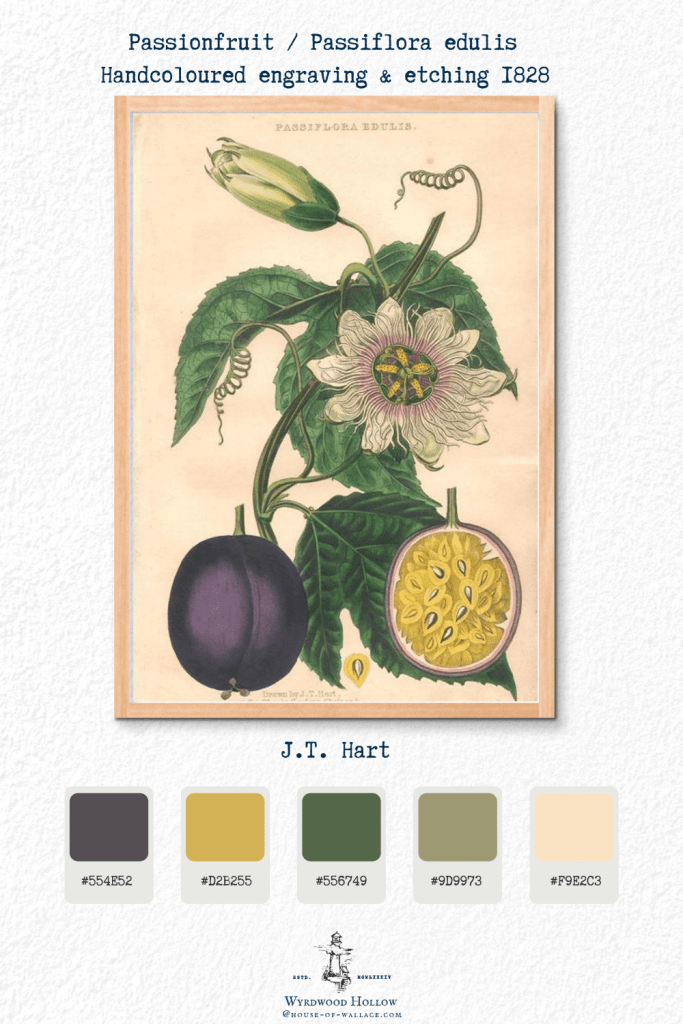
Passionfruit Passiflora edulis (introduced)
foraging Species This Week
Passionfruit Passiflora edulis (introduced)
Plant names: Passionfruit, purple passionfruit, yellow granadilla (cultivars vary)
Latin name: Passiflora edulis (purple) and P. edulis var. flavicarpa (yellow)
Growth Stage
Peak fruiting for many vines; ripe fruit commonly present through summer.
Notable Features
Vigorous climber that escapes gardens and naturalises along fences, creeklines and disturbed sites.
Identification key
- Twining vine with tendrils
- Lobed glossy leaves
- Distinctive ornate flowers with a corona of filaments (purple/white)
- Fruit are round to oval, 4–8 cm
- Green turning purple (or yellow for var. flavicarpa) when ripe
Urban Foraging
- Search fences
- Backyards (with permission)
- Creek corridors
- Areas where garden vines hang over paths.
Sustainability
- Take moderate amounts from several vines
- Leave fruit for birds that disperse seeds
Harvesting notes
- Pick when fruit colour changes fully (purple or yellow) and the skin becomes slightly wrinkled — that indicates optimal aroma and sugar.
- Store in a bin; use soon after picking.
Fruiting
- Summer fruiting
- December typically abundant
Flavour
- Intensely aromatic
- Sweet‑tart pulp and aromatic seeds
- Excellent for juices and desserts
Smell
- Strong, perfumed tropical aroma when ripe
Optimal Sunlight
- Full sun to light shade; better fruiting in sunnier, sheltered spots
Check for safety
- Avoid fruit with mould, feral animal damage or chemical exposure
- Wash and strain pulp before consuming raw
Note
- Vines can be thornless but dense
- Watch for snakes and wasp nests in thick growth
- Some people dislike seeds; strain if necessary.
Processing
- Pulp is eaten raw, juiced, or cooked into curds, syrups and sauces
- Seeds are edible and provide texture but can be strained.
Species
- Introduced and widely cultivated
- Often naturalises in warm urban areas
Where to look for them
- Fence lines
- Creek embankments
- Garden edges
- Hedgerows where vines can climb
Responsible Harvesting
- Harvest no more than ~30–40% of accessible ripe fruit on a vine
- Select fruit with full colour and slight wrinkle for best flavour.
Field Sketch
Weather & Observations
Weekly Weather Field Notes
Weather Notes
Weekly Weather Tracker
| Date | Clouds | Wind | Pressure | Sunrise | Sunset | Moonrise | Daylight | Emotional Weather |
|---|---|---|---|---|---|---|---|---|
| 26 Oct | High cirrus | Gentle southerly | 1012 hPa | 6:12 AM | 7:23 PM | 8:45 PM | 13h 11m | Luminous, porous |
Weekly Summary
This week began with warm winds and ended in soft drizzle. Cloud formations echoed internal shifts.
Note: Climatological averages provide typical weather patterns based on historical data, offering reliable general guidance rather than exact forecasts. Cloud types and wind directions can be described broadly, reflecting common occurrences rather than daily specifics. Barometric pressure averages indicate general weather tendencies but not precise changes. Precipitation values represent average amounts and frequency, acknowledging actual rainfall can vary significantly from these norms. This approach is ideal for understanding usual conditions over time, not for detailed short-term predictions.
Field sketch




Leave a Reply